
Shorter University is a private institution in Rome, GA with an acceptance rate of 96% and 1,121 students. The middle 50% of admitted students score 1040–1200 on the SAT and present an average GPA near 3.45. The average net price after financial aid is $16,692 per year.
About Shorter University
A private 4-year urban university in Rome, GA.
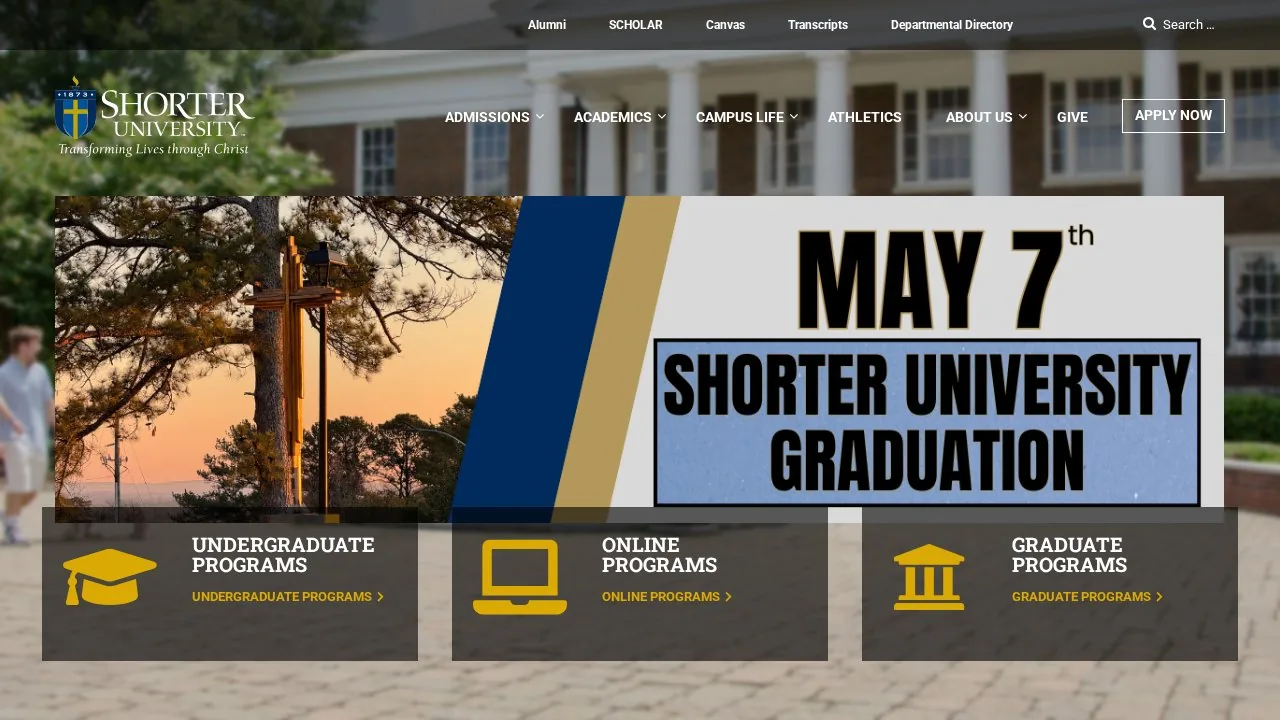
Shorter University is a college in Rome, GA. It enrolls roughly 1,121 students. The most recent acceptance rate is 96%. Admitted students typically score between 1040 and 1200 on the SAT.
Your chances at this school
What admitted students look like here. Sign in to see how your own profile compares.
Accessible admissions with broad enrollment.
What strengthens an application here
- SAT scores of 1040 to 1200The middle half of admitted students scored in this range. A score in the upper part of it strengthens an application.
- A GPA near 3.45 or higherThis is the average across admitted students.
- Depth in one or two activitiesSustained commitment, a leadership role, or a result in a few activities says more than a long list of memberships.
Your chances estimate is based on your academic profile and activities — it is a guide, not a guarantee of admission. Decisions weigh essays, recommendations, and fit factors that aren't in the data.
Admissions
What it actually takes to get into Shorter University. Test scores, GPA, application requirements, and deadlines.
Admitted student profile
Range shown is the middle 50%.
This school doesn't require test scores, so these ranges reflect only students who chose to submit — applicants who submit tend to have higher scores. The real admitted range likely runs lower. Don't rule yourself out on scores alone.
Application requirements
- Test-optional
Cost & financial aid
Published costs can be misleading. Here's what families actually pay at Shorter University after grants and scholarships.
Net price by family income
Average amount paid out of pocket — tuition, fees, and room & board minus all grant aid.
Net price represents the average cost after grants and scholarships for students receiving federal financial aid.
Academics & majors
Where students at Shorter University concentrate, and how the classroom experience scales.
Student body
Who attends Shorter University. Enrollment, diversity, and where students come from.
Race & ethnicity
- White63%
- Asian1%
- Hispanic10%
- Black19%
- Two or more races4%
- International2%
Gender
- Female49%
- Male51%
Outcomes after graduation
What Shorter University graduates do next — and what they earn.
Is it worth it?
Earnings, debt, and price side by side — context for the cost-vs-payoff question, not a ranking.
- Median earnings
- $44.6k
- Typical debt
- $12.5k
- Avg. net price
- $16.7k/yr
- These numbers reflect who enrolls, not the value the school adds. A college's earnings can look high simply because it admits wealthier, higher-scoring students — not because of what happens there.
- Earnings vary far more by major and career path than by school. A school-wide median blends engineers and artists into one number that may match no real student.
- Federal earnings and debt figures cover only students who received federal aid, so they leave out full-pay students and can skew the picture.
- Net price is an average across aided students and debt is the median for borrowers only — many students borrow nothing. Your actual cost depends on your own aid package.
What this means
$45k is below the national bachelor's-graduate median at the 10-year mark, and a 37% graduation rate is below the national average.
Similar schools
If Shorter University is on your list, students often also consider these.
Related searches
- Shorter University acceptance rate
- Shorter University SAT scores
- Shorter University tuition cost
- Shorter University deadlines
- How to get into Shorter University
- Best schools in Georgia